Moving Abroad: Initial feelings

After a long and rigorous interview process, the initial news that we were moving to Australia was real, we decided to go! Some people may not have a choice to move to a different country, in which case, these emotions may be experienced differently.

Initial feelings: shock, overwhelmed, excitement

I think I was in state of shock initially, full of emotions, but my head also full of things to do and sort out. I became particularly overwhelmed, trying to combine work, children and a move abroad. I felt like I was walking through a long and dark tunnel of organisation, bureaucratic processes and logistics. I kept feeling determined enough to keep everything ticking and trying to take everything in, but there was so much to take in, so much unknown… Yes we were making a decision, I never felt that I was pushed or that I was made to go, we could have decided not to go. After long debates and discussions, we felt we had to go for it, live life to the full, take a great opportunity on!

Denial, unknown and fear

Initially, I felt the move was far ahead and could not necessarily envisaged how we would make it work. I was upset to announce my leaving to my colleagues and friends. I was not ready for ‘for sale’ board to go in front of MY house…Not sure it was denial, I had agreed to move and shared this project. I felt more shock that I agreed to do this, such a long way away on the planet. As a child, I had always felt that Australia was way too far to go to (from Canada). After living in the UK for 18 years, I felt more connections to that country as we had met Australians, but my knowledge of that country was still very limited. I was not sure I would be able to live the daily life. Being there on holiday is pretty different to living daily life. Yes there were fears of not being up to it, ‘what if it fails’, ‘what if we don’t like it’, ‘what if we end up in difficulties so far away’…

What do we tell the kids?

We felt that the full interview process and initial thoughts about a potential move was not for the kids to be part of. We told the kids we were moving when it was a reality. Yes, we had alluded to it along the way, just asking them their thoughts about possibly moving one day, but we never talked about it firmly before we were not 100%. We chose a moment where we are all together to announce the news, after we had been given a go ahead from the company. We invited friends over to tell them the news too. We felt it was important for it to be a celebration. Yes, there were tears but also laughter, celebrations and talks of opportunities and exciting times ahead.

Staying strong and positive

There were moments (and still are) where kids were anxious, upset and doubting our decision as parents. There were many situations where we had to bring positive thinking into discussions. I have found that it’s important children see you do that, as parents, as it will set example and shape their ways of thinking too, showing them how to think positively.

“it will be a great adventure”

“we will be able to see this and this”

“think about the weather”

“let’s look at houses together”

“let’s look at new activities you could do over there”

“you will be able to make new friends, have friends all over the world”

“what about we set ways to speak to your friends” (technology really helps nowadays)

It has really helped to talk to the kids in this way. It has allowed the future to be present in our lives and bring excitement to our move. There are occasions where we could have dwelled into the negatives and doubts, but this had the danger to bring us all down. We remained strong, turn possibly negative thoughts into positive ones, and carried on.

So if you are moving abroad:

  • allow time for your emotions to be lived and talk these through
  • plan discussion time within your family routines
  • encourage everyone to think positively about the move and choose a new activity or projects so that it is a move for everyone
 

I want another family, my bedroom light is not working, I don’t have many toys and Maman’s bed is now pink. I want a blue house! (Émile, 3 years old)

It’s interesting how children tell us messages…that this new situation and the changes around them are possibly not working as much as they would like. Initially, when preparing the move, I was particularly conscious of the oldest two’s needs as they were able to express themselves, have discussions, ask questions. For the little one, we kept saying he will not remember our last house, it will be alright. A colleague of mine had said do not underestimate the little one’s needs when packing. She had experienced a move with young children and felt that the youngest had had a hard time adapting and was still recovering from it. I packed as much as I could within a limited frame of time. And yes I should have been wiser. We arrived in Australia with some toys, books and his special blanket, but not enough to keep the little one going. Luckily, technology can do wonders in providing some anchor points to him such as programs he knows and he is used to. His brother and sister have also needed to help in playing different games together. The garage, an empty space, with a high number of empty boxes, has been a great source of imaginative play. They have also played 40-40, hide and seek, and lots of games in the woods around the house. The problem is that 5 weeks of no television (with some devices but limited Wi-FI), sleeping on camp beds, with little around, it can be a long long time with young children…

Within that period of time, I also wanted to ensure that he settles at nursery so that when I am ready to go to work, ‘he is ok and I am ok’…Although he was used to a childcare setting, he has found settling in a new childcare setting very tricky. We have had lots of discussions together and with the ‘ladies’. We have had a lot of tears, and tears, and tantrums. It has been particularly challenging.

Yes we have gone shopping and bought him some toys along the way. I feel that although these have helped, these toys are not his, the ones that come from ‘home’ and perhaps lack familiarity and belonging.

On reflection, I should have been a little more sensitive to my packing in regards to our little one. The following would have helped:

  • A bag of little figures/people and cars, furniture
  • Books about moving
  • Photos/scrapbook
  • A bag of lego/puzzles
  • Some soft toys (these take a lot of room in suitcases, so they would need to be chosen carefully to only bring the significant ones)

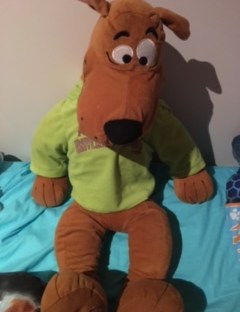
My best buy has been an enormous ‘Scooby Doo’ teddy he found in a charity shop last week.

They are both about the same size. They have eaten, slept, sat on the sofa, cuddled, gone walking together. When he saw the teddy, he said he wanted to show it to his friends at nursery. Today, he went to nursery with ‘his friend’. He was given a little plane bag to go with his teddy (socks, toothbrush and put a few other things in it). After a long 8 weeks, he has finally gone to nursery without a tear, hooray! It has taken a while to find something that worked well to settle him. This strategy seemed to work very well, the following strategies have also been helpful:

  • Talking to staff about his interests
  • Talking with us about what he likes at nursery
  • Talking with the ladies about an activity we did at home
  • Communicative and positive transition times: morning and home times
  • Transition times with family members i.e. brother and sister coming in to the nursery and talking about what he does there
  • Bringing a toy from home to show his friends and the ladies (often a new toy we purchased as we had little)
  • imaginative play about nursery and school, talking about characters having similar feelings, what that means, how it can be resolved, with siblings and parents
  • Looking at pictures of him doing an activity in the nursery portfolio
  • Mum and dad coming to play for a little bit at nursery
  • Surprises at the end of the day such as choosing at the supermarket what he wants to eat for dinner

I have to admit that he has been playing up, demanding a lot of time, cuddles and showing some interesting behaviours such as experimenting with ‘wees’ and ‘poos’, hitting, biting and having many tantrums. One tantrum was on the high street, great stuff when you feel observed by everyone! Yes he is at that age, but he is also testing because he can, rules and routines have changed so he must feel he can change things too. It is hard because we have a rental house with not much in it and a lot to sort out so routines of bedtime, etc. have been a bit different. It has required a lot of adaptation from everyone (and it is not finished!) and he has felt that too. Respecting my rules and values, continuing to be firm with rules and repeating scripts have also worked. For example, ‘let’s go to nursery’ (not giving a choice such as ‘do you want to go to nursery’). He often replies ‘I don’t want to’. Every time, I will reply ‘Maman is going to work, lots of work to do, you know I love you and will come back at the end of the day to pick you up’. But ‘I don’t want to go to school’ and then I repeat the same script…and so on.

The little one is having amazing days, but we have some tears again. Ladies reassure me that he calms and settles quickly. As he is having amazing days, I have changed my script a little to highlight all the things he loves to do at nursery, such as ‘You will have a great day on the swing with Scooby Doo and play in the sand pit’, and reinforcing that I will have a boring day.

Routine is the same every morning, we say the same thing, we do the same thing (except on our days together). I try not to be too anxious and worried…It’s a process…

Moving Abroad: What to do then?

So the basics are sorted. You feel happy about the move. What happens next?

Keep open communication with the employer (if you have one or anyone involved in helping you getting there).

This is really important as it allows you to continue iron any issues or difficulties, or just to keep in touch. They have employed you, they are looking forward to have you working with them so keep the momentum going. It may help understanding any issues that will come up in your job. It may also help in keeping you excited about the move.

Decisions

You will have to make decisions about the move in more practical terms and explore different options. We made a number of decisions along the way, prior to the move. We decided we wanted to arrive in Australia in a house (not a hotel) because we felt it would be easier to manage with the kids. We also decided to all come together. I could have stayed in the UK with the kids for a couple of months before everything was completed and sorted (sell of the house, secure a rental in Australia that we chose ourselves) but we felt that we wanted to be all together, at the same time, living the same adventure, settling in all at the same time. As the academic year starts in February in Australia, we also wanted the children to be in schools as early as possible in their new school year so they would miss too much and would settle in their year groups at the same time as everyone else. These decisions may be different for every family. I suppose it is just important to explore all the different options, analyse them and then the best and most informed decision at the time.

Here are some of the key decisions:

  • How do we get there? Not just for the plane journey, but also other means of transport from and to the airports. Think that you will have a number of suitcases with you and that you may not be able to take the train, or may need a bigger car to transport you to the airport. Same issues apply if you are moving to a different European country.
  • When do we need to go? Although you may have an idea of a date in mind, it would be foolish to book plane tickets before your visa arrives. Your employer may want you there as soon as possible, but there is the visa process to go through. You also may need to give your resignation and work a period notice. Also think about settlement periods with selling a house and whether you will be needed in the country for any particular reasons. It may be that you wait for the visas, with a date in mind, and then as soon as these arrive, you need to move quickly. Be prepared to move quickly. Everthing then tends to be on standby for a bit, with ifs and buts.
  • How and where will we live initially? A rented house, flat, friend’s house, relatives, hotel, youth hostel, B&B? Where? Within a specific catchment for schools? Who can help in visiting a house for you?
  • Do you feel you need to go on a familiarisation visit prior to moving? I found our familiarisation visit particularly essential to our move and the subsequent decisions we made. There was an area we really liked and we decided to focus our search for a house there. I was able to get a feel for the area, meet people and pick up lots of information for the children. I discussed our familiarisation visit in another post Familiarisation Visit: What to do and think about
  • What type of furniture do I need initially? If any? How will you sleep? On camping mattresses? In beds, borrowed or purchased? Initially we were on camping mattresses and this was absolutely fine, an adventure. Overtime, it became a problem due to comfort…10 weeks on camping mattresses is a long time. We chose to purchase a cheap double bed on a local internet site that we will resell. We borrowed single beds from friends. My little one had outgrown and was ready with a junior bed, I had sold his cot before leaving so I purchased a new bed for him not long after we arrived.  We were given sofas and bought a table and chairs from a charity shop. We lived with very little furniture for 10 weeks, an adventure. Think about furniture you want to keep or sell and then you can purchase new pieces as soon as you arrive in the country if you know it will not come on the container. We colour coded furniture in the house with stickers, green/coming with us, yellow not sure/could go and red/selling/charity shop/donations. This really helped shape our initial decisions.

Moving Abroad: What to do first?

Yes, there is a lot to sort out. It can be overwhelming. Don’t overestimate the task ahead! Here are some key points about the most important things that need to be understood and sorted out very quickly and initially:

Visas

You cannot move to another country without a visa unless you have the nationality of that country so you need to get busy researching about different visas and possibilities. Different countries and visas will have restrictions so make sure you research well to avoid surprises. A Business Sponsored visa (the one we are on) is a great way to get into a country without long delays but you have to get a job in the country prior to moving and the employer has to prove that you are the best person for the job.

Health system

The health of your family is very important and should there be illness in the family, you want to be fully covered to avoid expensive charges. As part of our visa, we had to prove we had purchase private health insurance. Different countries will have different rules on using health services so it is important to research this further.

Qualifications

For my husband, his qualifications were easily transferable as he was the main person being offered employment, but for me the process is a little more tricky than this. I initially was particularly worried about my qualifications being transferred to the Australian system. I had already converted my qualifications from Quebec to an UK system so that I could complete a chartered psychologist course. I feel it has already been a very long process to get there. This process is not complete, I am waiting for some news. In the meantime, I have other projects…

It’s very important that you research carefully any transfers of qualifications to avoid surprises. Some countries do not easily allow conversion of qualifications, some other countries are more lenient and have cross country agreements.

The language in which you study can also have a big impact on the conversion of your qualifications as you may be required to do a native language test prior to practice in your field of your work.

Right to education and work

We were aware that not all countries allow a spouse to work on a Business Sponsored visa so we felt it was very important to clarify this early on. We had decided that it was crucial for me to be able to work as I had worked so hard to gain my qualifications. At this point, we needed to know restrictions about the visa, otherwise it would have aborted the move completely. We were also worried about access to education now and a few years later for the children. We were reassured that children would be entitled to education even though they are not Australian citizen.

Check any visa restrictions as early as possible as it can a huge impact on your decision to move. It is also important to envisage what may happen in a few years time, for example, where will the kids be at in terms of their education in 4 years time, as it can also have an impact on your decision. Similarly, a spouse may feel that working is not an issue at present because it is better to be at home with the children, for whatever reasons, but overtime, being in a different country and wanting to realise some specific professional goals may become an issue if the spouse cannot work. A decision to make such a big move could be initially a brilliant decision, but then becomes a nightmare because of different factors due to visa restrictions and educational opportunities.

Reevaluate life and professional goals

If you are thinking about such a big move, it may be a good time to think about what’s working well and what else you may want from your life. By reevaluating life and professional goals, it may help focus your thoughts and ideas about the move on what matters most to you. The Big Five Dreams for Life workshop really helped me think about it (http://www.bigfiveforlife.com; http://www.toutdego.ca). I was not necessarily in a place where I was reconsidering life options as I felt happy in my life, but I realised that it could be even better. It allowed me to spontaneously think about some next steps in my life and the purpose behind such a big move. It gave me sense of some future projects and put some realistic objectives for some ideas which I felt were unattainable.

Financial matters

Will you be better off living in a different country after taxes, extra costs, house prices, etc.? This could have huge implications on making the move a positive or very negative experience. Think about initial costs as well, costs of living, and hidden costs. In Australia, there are many hidden costs in schools. For example, parents pay for hiring a netbook, stationary, books and different expeditions.

Your Who’s

Do you know someone who lives in the country you are going to? Do you know a friend of a friend who may be able to put you in touch? You cannot anticipate how a little bit of advice or encouragement can go a long way. What about social media sites and blogs, you can make connections that way too…

Top Tips: Preparing Children for a Move Abroad

My children are 13, 9 and 3 so resources for different ages are explained here.

Researching together

Ask them to research on internet a specific topic, such as the weather, landmarks, activities, places to visit, etc.; this may help them feel they own the process of moving as well as feeling involved in discovery new things.

Maps

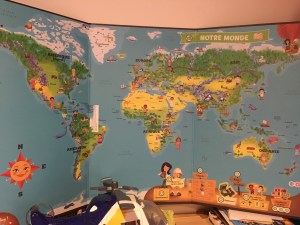
Put a map up in the house of where you will go. When we have travelled abroad we have always had a map up before our trip to show the kids our itinerary. We also have a world map in the house so that the children are familiar with places we have been, come from and can talk easily, with this visual aid, to guests.

2016-06-02 15.08.41

Toys and special objects

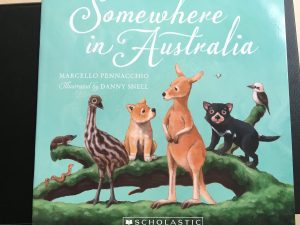
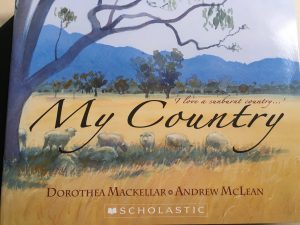
I am not a huge fan of saying you must be purchasing expensive toys as I feel the message here for the children is about the future experience and the adventure. A few books about the new country can help talking about the future adventures and understand the country’s culture, history and sceneries.

 IMG_0371IMG_0370

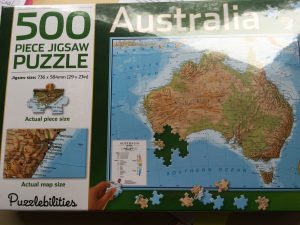
Puzzles with a map, animals and places to visit, can be very helpful to initiate conversations about the new country. It can help children in getting to know the country and area they will move to, understand the geography, states and capitals, culture, etc.

IMG_0369

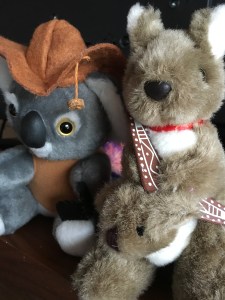
Small teddies can be great anchor points to initiate conversations and also be a comforter. Yes it can help for younger children but I have found that some simple toys also help the older ones. In a conversation, it is just that language is more complex and extended compared to language used with a younger child.

  • “look this is a kangaroo”: with a three year old, you may say look at the tail, the baby in the tummy, demonstrate how it hops; with a thirteen year old, you may say let’s have a look at their habitat on internet, where can you find them, will we see some where we will live, reproduction systems, and extend the conversation that way.
  • IMG_0233

Having anchor points like this in the house may help children play with each other, allowing the older ones to play with the younger children with those toys, use terms and language present in their future country. The older children can also read the story books to the younger children or look at maps together. Great time spent together!

Travelling books 

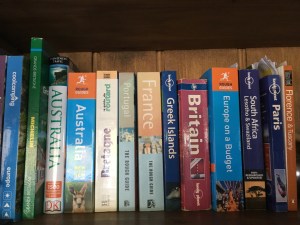
Initially, we did not know much about Australia, I had never been myself, and my husband only once. We had heard lots about it but in terms of geography, weather, culture. We had some Australians along the way. I have to admit I felt deskilled and ignorant about the country. The  children kept asking lots questions and I kept saying “I don’t know”. I eventually purchased a couple of travelling books so that we could read about the country and refer to the books quickly. Yes internet has most of the information nowadays but I felt that reading a book together on the sofa brings a different dimension to the experience. When we travelled to different countries, I have always bought a travelling book so that we have that book with us in the car and the plane. It helps with bookings, places to visit and places to eat. It’s also great and exciting to prepare a trip and a move using a travelling book, it makes it real and visual for the children. When they ask questions, you refer to the book. It gives them the opportunity to learn how to research and search for information, giving them a sense of curiosity and thirst for learning.

IMG_0250

An opportunity comes up, what should I do?

  • Keep a positive and an open mindset…We have always lived our lives where we have been curious and sensitive to new experiences and adventures. I have always said to my husband or the kids to go for it when applying for new jobs or a place in a team, ‘you never know when it will open doors’, and if it isn’t successful it doesn’t matter, it is a learning process, it will have a purpose somehow.
  • Mind mapping, checklists, pros and cons: thinking about a new adventure…it was a huge decision, even just showing interest to move to Australia, because then I was agreeing for all of us to be moving across the world. We spent many evenings, away from children’s ears, mind mapping our thoughts, making checklists of priorities and looking at the pros and cons of this new adventure. I felt it was very important to explore every eventualities, fears, anxieties, opportunities…it had to suit all of us as a family.
  • Planning: Even when we did not know if my husband had been successful during the process, we carried on planning, looking at houses on internet, searching about the area, talking to people (without disclosing we had applied for a job) who may have experienced the country in terms of holidays or to live. It kept the project moving on. It also helped form ideas as to what we would do, where we would live, finding schools, finding about costs of living, etc.
  • Talking to close family and friends…We talked to people close to us and asked what they thought about our project. This helped us continue to form our thoughts about the project such as pros and cons, etc. We received lots of positive feedback so we felt reassured about the process and the decision.


Moose to opossum, Opportunities to Challenges…after all we are all global citizens!

As we are living new adventures, I have been thinking it would be great to write about it in a more formal way than perhaps other social media sites. I also wanted my thoughts and experience to benefit families who may experience something similar to us. This site is intended to give a flavour of what it may be like to move abroad. I also intend to post some ideas and solutions that I found useful and that may help other families experiencing global migration. Information, ideas and solutions may be pertinent to practitioners and professionals supporting families and children experiencing such big transitions. I sincerely hope you find reflections, insights and ideas helpful. Do not hesitate to post some interesting solutions and ideas too. Why not share some of your experiences, similar or different?

I could write in French (my first language) but global pressures, dominant language and my daily existence make it difficult to write in my first language (j’espère que vous me pardonnerai!). I intend to write in English but please feel free to communicate in French if, as me, your first language is French. I apologise in advance for those who would like to communicate in other languages as I would love to be able to communicate in more languages.